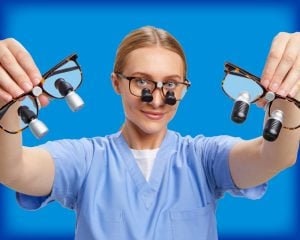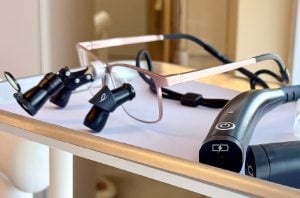
When dental professionals think about improving visualization, magnification often receives the most attention. But dental illumination is just as important. Optical quality, working distance, ergonomics, and lighting work together to help clinicians see clearly and work comfortably.
But magnification is only one piece of the puzzle.
As Enova EVP Scott Green recently noted, clinicians often spend too much time focusing on magnification levels and not enough time evaluating their entire visualization system. The quality of the optics, working distance, ergonomics, and perhaps most importantly, illumination, all play a significant role in how comfortably and confidently clinicians perform throughout the day.
The reality is simple: if you can’t properly illuminate what you’re trying to see, even the most advanced magnification system can only take you so far.
What Is Dental Illumination?
Dental illumination refers to the lighting used to visualize the treatment area during clinical procedures.
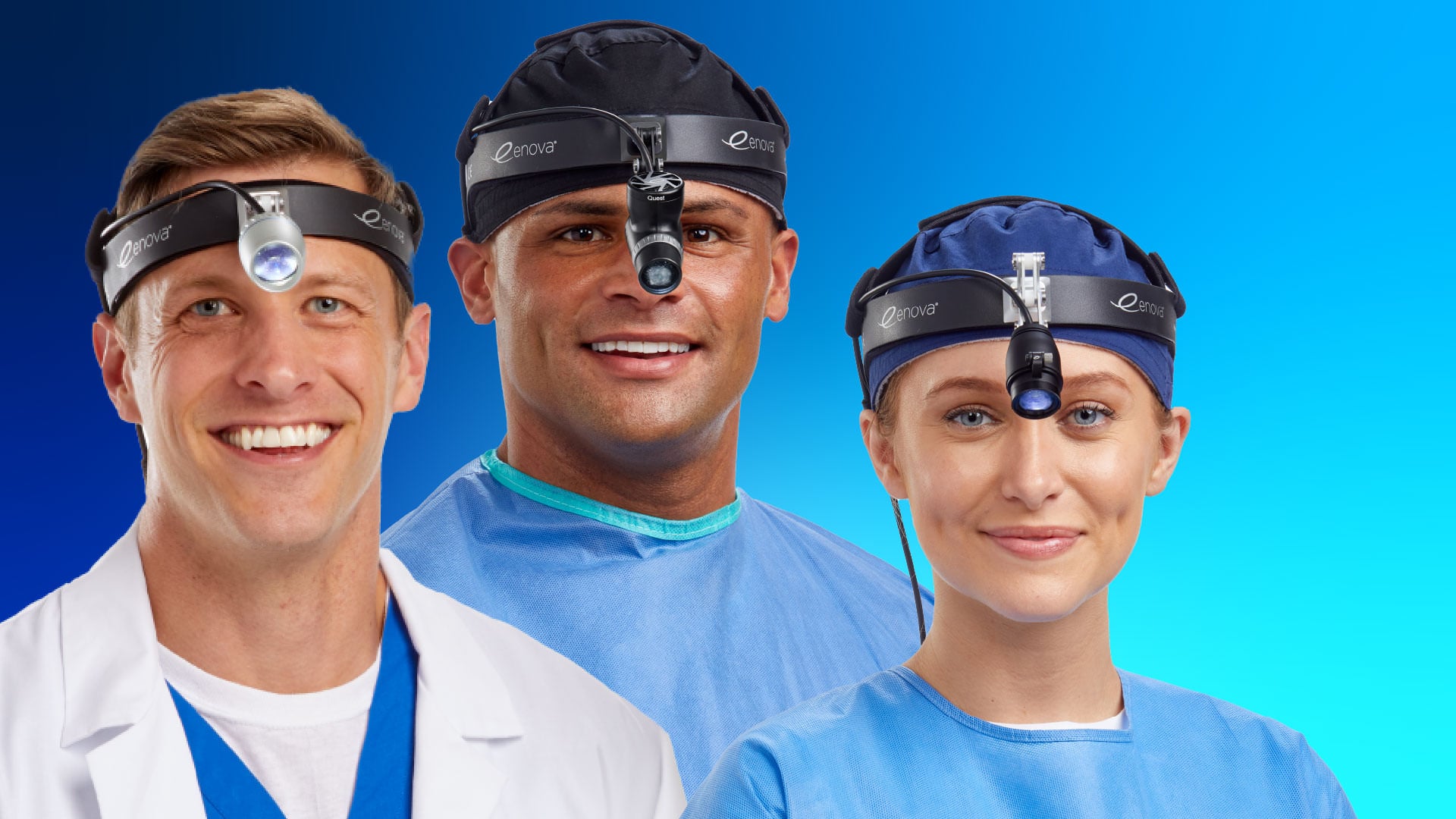
While overhead operatory lights provide general visibility, they often create shadows caused by hands, instruments, patient positioning, or the anatomy of the oral cavity itself. Dedicated illumination systems, including loupe-mounted LED lights and surgical headlights, help direct light exactly where the clinician is looking, creating a brighter, more consistent field of view.
When paired with magnification, proper illumination becomes an essential part of a complete visualization system.
Why Does Illumination Matter?
The oral cavity is one of the most challenging work environments in healthcare. Clinicians operate within a confined space where fractions of a millimeter can influence diagnosis, treatment planning, and clinical outcomes.
Proper illumination supports:
- Better visualization of anatomical structures
- Reduced shadows within the treatment field
- Improved diagnostic confidence
- Greater procedural precision
- Reduced eye fatigue
- Enhanced ergonomic posture
As magnification increases, illumination becomes even more important.
Scott Green explains it best: “As magnification increases, good coaxial illumination becomes essential. A high-quality LED light with a uniform beam and natural color temperature often makes as much difference as the optics themselves.”
For clinicians investing in visualization, lighting should never be considered an afterthought.
Illumination and Ergonomics Go Hand in Hand
Poor visibility often leads clinicians to compensate without even realizing it. Leaning forward, repositioning frequently, or adjusting posture to see around shadows can contribute to physical strain over time.
This is one reason modern visualization systems place increasing emphasis on both illumination and ergonomics.
When light follows your line of sight, clinicians can maintain a more natural working posture while keeping their focus on the treatment area. Combined with properly fitted loupes, quality illumination helps support both clinical performance and long-term career health.
Who Should Care About Dental Illumination?
The answer is simple: everyone.
Dental hygienists rely on illumination to identify deposits, assess tissue health, and improve visibility during preventive care.
General dentists depend on consistent lighting during restorative procedures, crown and bridge work, examinations, and patient education.
Specialists—including endodontists, periodontists, prosthodontists, and oral surgeons—often require exceptional visualization to perform highly detailed procedures with precision.
Regardless of specialty, every clinician benefits from seeing more clearly.
What Should You Look for in a Dental Illumination System?
Choosing the right illumination solution involves more than selecting the brightest light available.
When evaluating dental headlights and loupe lights, consider:
- Beam quality and uniformity
- Natural color representation
- Weight and comfort
- Battery performance
- Ergonomic design
- Compatibility with your loupes and workflow
- The specific procedures you perform most often
The best illumination system is the one that supports your clinical needs while integrating seamlessly into your daily practice.
Finding the Right Illumination Solution
Just as no two clinicians are exactly alike, no single illumination system is ideal for every practice.
Some clinicians prioritize lightweight simplicity for all-day comfort. Others need maximum brightness for advanced procedures or prefer the flexibility of a wireless system.
Enova’s illumination portfolio is designed to support a wide range of clinical preferences and working styles:
- The Atom™ offers a lightweight solution for clinicians seeking simplicity and comfort.
- The Axis Elite™ LED Light System was designed around three primary goals: maximum illumination, minimal head weight, and improved ergonomics. 1
- The Qubit® Pro Headlight offers up to 120,000 lux with a fixed 3.6-inch spot. Its adjustable pivot bracket helps clinicians align the light with their individual height and viewing angle, making coaxial alignment easy with or without loupes.
- The goal isn’t to find the brightest light or the most advanced feature set. The goal is to build the right visualization system for your clinical environment, patient population, and workflow.
See Better. Perform Better.
Illumination is more than a convenience. It’s a foundational component of clinical visualization.
When clinicians evaluate their lighting systems with the same attention they give to magnification, they often discover opportunities to improve efficiency, ergonomics, and overall clinical confidence.
As Scott Green explains, the goal isn’t to find the “best” product—it’s to find the right visualization system for the procedures you’re performing, the patients you’re treating, and your stage of clinical development.
Because when you can see clearly, you can work confidently. That’s the power of illumination